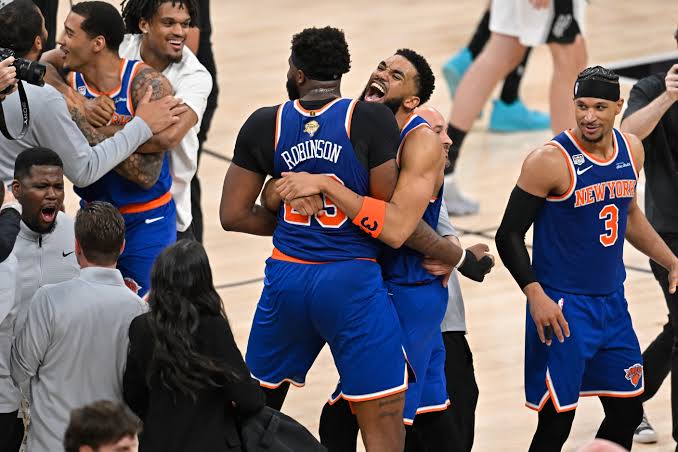
When the New York Knicks ended their championship drought and brought the NBA title to Madison Square Garden, the celebrations that erupted across the city were about far more than basketball. For a franchise that has spent decades as a byword for dysfunction, unfulfilled promise, and the particular kind of heartbreak that comes from caring too deeply about something that repeatedly disappoints, the championship represented an emotional resolution that transcended sport entirely.
The Knicks’ story resonates in ways that few sporting narratives can because it mirrors the experience of New York itself — the bruising encounters with failure, the stubborn refusal to abandon hope, the conviction that greatness is attainable even when the evidence points elsewhere. Basketball in New York is not merely entertainment; it is identity, community, and the expression of something essential about the city’s character.
The team that won this championship bore little resemblance to the superstar-assembled rosters that some believed were the only path to a title for a major market franchise. These Knicks were built through patient development, smart drafting, and the cultivation of a collective identity that proved more durable than individual brilliance. Their best player was exceptional but not singular; their strength was the depth of their roles and the ferocity of their defensive commitment.
The coaching achievement deserves particular recognition. The transformation of this group from playoff contenders to champions required tactical adaptation across a long and grinding season, strategic innovation in the face of injuries and personnel changes, and the kind of man-management that earns genuine loyalty from players who are accustomed to the transactional calculations of professional sport.
Players who lived through the more difficult years of the franchise’s recent history described the championship with visible emotion. Some had considered whether their Knicks careers would end without a ring; others had turned down more apparently lucrative offers elsewhere out of a commitment to this city and this jersey that defied conventional sporting logic. Their perseverance was rewarded in the most unambiguous way sport can provide.
The city itself provided the context that made the celebration extraordinary. New York had waited long enough that the streets filled with people who had never seen their team win, children who had grown up with only stories of what success might feel like, and older supporters who had reconciled themselves to the possibility it might never come. The release of that accumulated anticipation was genuinely moving to witness.
Madison Square Garden, which has hosted some of the most significant moments in American sporting history, provided a fitting stage for the championship celebration. The arena, which has sometimes been described as the world’s most famous sporting venue, was transformed by a crowd whose emotional investment in what they were witnessing had been built across lifetimes rather than seasons.
Writers who have covered the Knicks through their difficult decades have reached for comparisons across sport and culture to capture what this title means. The most honest among them have settled on acknowledging that some things in sport simply resist full articulation — that the meaning of a championship for a city and its people is felt rather than analysed, and that feeling is not diminished by the impossibility of describing it perfectly.
One supporter, who had attended Knicks games with his father for thirty years and now brought his own children to the Garden, said simply: “I always knew it would happen eventually. I just needed it to happen while I was still here to see it.” That sentiment, repeated in countless variations across the city in the days after the final buzzer sounded, captures everything that matters about why sport, at its best, is worth caring about.