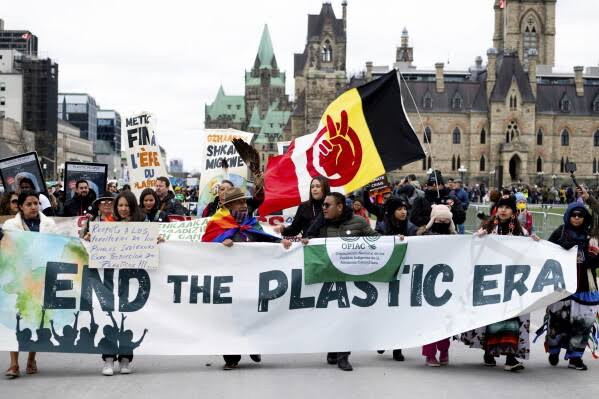
The volume of plastic waste entering the world’s oceans has reached levels that scientists describe as an irreversible tipping point in marine ecosystem degradation, with the United Nations Environment Programme estimating that more than 11 million metric tonnes of plastic enter ocean waters every year — a figure projected to nearly triple by 2040 if no binding international action is taken. Against this backdrop, negotiations over what would become the world’s first global plastics treaty have taken on a renewed urgency, with member states convening for a final round of talks that will determine whether international consensus can translate into enforceable commitments.
The science underlying the treaty push is unambiguous. Microplastics — fragments smaller than five millimetres produced through the breakdown of larger plastic items — have now been detected in human blood, lung tissue, and placentas, as well as in the deepest ocean trenches and the most remote Arctic ice cores. Research published in leading environmental science journals has documented correlations between microplastic exposure and inflammatory responses, endocrine disruption, and cellular damage in both marine organisms and laboratory animals. What was once considered a localised waste management problem has been reframed by the scientific community as a systemic chemical contamination challenge with implications for food security, public health, and biodiversity.
The negotiations, formally known as the Intergovernmental Negotiating Committee process, have brought together representatives from more than 170 countries with starkly differing priorities. A coalition of nations including the European Union, Canada, and several Pacific island states has advocated for a treaty that addresses the full lifecycle of plastic — from production limits on virgin polymers through to waste management and extended producer responsibility. Major petrochemical-producing nations, by contrast, have resisted production caps, preferring instead to focus treaty provisions on waste collection and recycling infrastructure as the primary mechanisms of intervention. The gap between these positions has proved substantial, and bridging it has required sustained diplomatic effort and scientific advocacy from independent expert bodies.
Critics of a recycling-first approach point to the structural limitations of existing recycling systems as evidence that waste management alone cannot address the scale of the problem. Global recycling rates for plastic have consistently hovered below 10%, a figure that reflects both the technical challenges of sorting and reprocessing mixed plastic streams and the economic reality that recycled plastic is frequently more expensive to produce than virgin material derived from fossil fuels. The global plastic production system, which generates approximately 430 million tonnes of plastic annually, is structurally integrated with the petrochemical industry in ways that make voluntary reduction commitments inherently limited without regulatory frameworks that alter production incentives.
Developing nations have raised a distinct set of concerns centred on equity and finance. Many countries in the global south bear disproportionate burdens of plastic pollution while having contributed least to global production, and their negotiating positions have consistently emphasised the need for technology transfer, capacity building, and dedicated financing mechanisms to support compliance. Without meaningful financial commitments from industrialised nations and major producers, even a technically ambitious treaty risks becoming an instrument whose obligations fall unevenly on those least equipped to meet them — a pattern that has undermined previous multilateral environmental agreements.
The outcome of the final negotiating session will be watched closely by both environmental advocates and the petrochemical industry, whose collective investment in new plastic production facilities amounts to hundreds of billions of dollars in capital expenditure planned for the coming decade. The treaty, if concluded with meaningful production provisions, would represent one of the most consequential pieces of international environmental law since the Paris Agreement on climate change — and one of the few occasions on which the global community has attempted to regulate an industrial system at the point of production rather than the point of disposal. Whether the diplomatic will exists to match the scientific evidence remains the defining question of the negotiations.