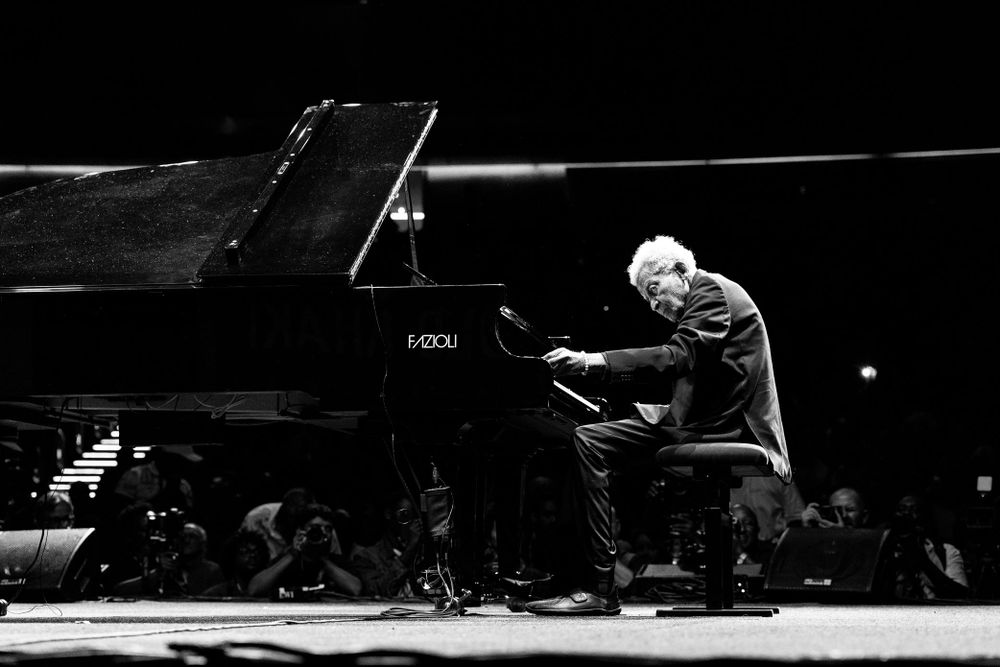
Abdullah Ibrahim, the South African jazz pianist whose work bridged African musical traditions and American jazz innovation over a career spanning more than six decades, died in Germany at the age of 91 following a brief illness. His death has been mourned across the world by musicians, critics, and listeners who recognised him as one of the most original and spiritually resonant voices in the history of the piano.
Born in Cape Town as Adolf Johannes Brand — he later took the name Abdullah Ibrahim upon converting to Islam — he emerged from the vibrant and diverse musical culture of District Six, the Cape Malay and coloured neighbourhood that was one of South Africa’s most extraordinary communities before the apartheid government destroyed it through forced removals. The music he heard growing up — American jazz filtering through the radio, Cape Malay choirs, church music, the specific rhythmic traditions of his community — shaped a musical imagination that could not be reduced to any single genre or tradition.
His international breakthrough came through an encounter with Duke Ellington in Switzerland in the 1960s, when Ibrahim — then recording as Dollar Brand — played for the American master, who was so impressed that he sponsored the young South African’s first American recordings. Ellington’s endorsement opened doors that allowed Ibrahim to develop his voice in conversation with the wider world of jazz while maintaining the deeply African foundation that made his music distinctive.
His most celebrated works draw on township jazz, the music of Mannenberg — a composition that became essentially a hymn of the Cape Coloured community and later of the anti-apartheid movement — and the expansive compositional ambitions of a musician who was as comfortable with extended suites as with intimate solo performances. The piano becomes, in his hands, an instrument of prayer, of history, and of profound emotional communication.
Ibrahim lived through some of the most turbulent decades of South African and global history, and his music reflects that experience without ever becoming merely political documentation. He was an artist who understood that the truest response to oppression and suffering is beauty — that creating music of transcendent quality is itself an act of resistance and affirmation. This understanding gave his work a depth that purely protest music could not achieve.
His later years were spent between South Africa and Europe, performing and recording regularly into his eighties with an undiminished creative energy that astonished those who worked with him. Younger South African musicians describe the experience of playing with or studying under Ibrahim as a revelation — encountering someone who carries the full weight of a tradition while remaining genuinely curious and alive to new possibilities.
Tributes from the global jazz community have been extensive and heartfelt. His influence on South African music alone would have been sufficient to ensure his legacy; the impact he had on international jazz, on the understanding of how African musical traditions can enrich and transform American forms, places him in the front rank of the music’s history.
The loss of Abdullah Ibrahim is the loss of a living connection to a particular moment in South African cultural history and a particular vision of what music can do when it refuses all limitations. His recordings remain, and they speak with the same quiet authority that those who heard him in person describe. That is the ultimate measure of what he achieved.