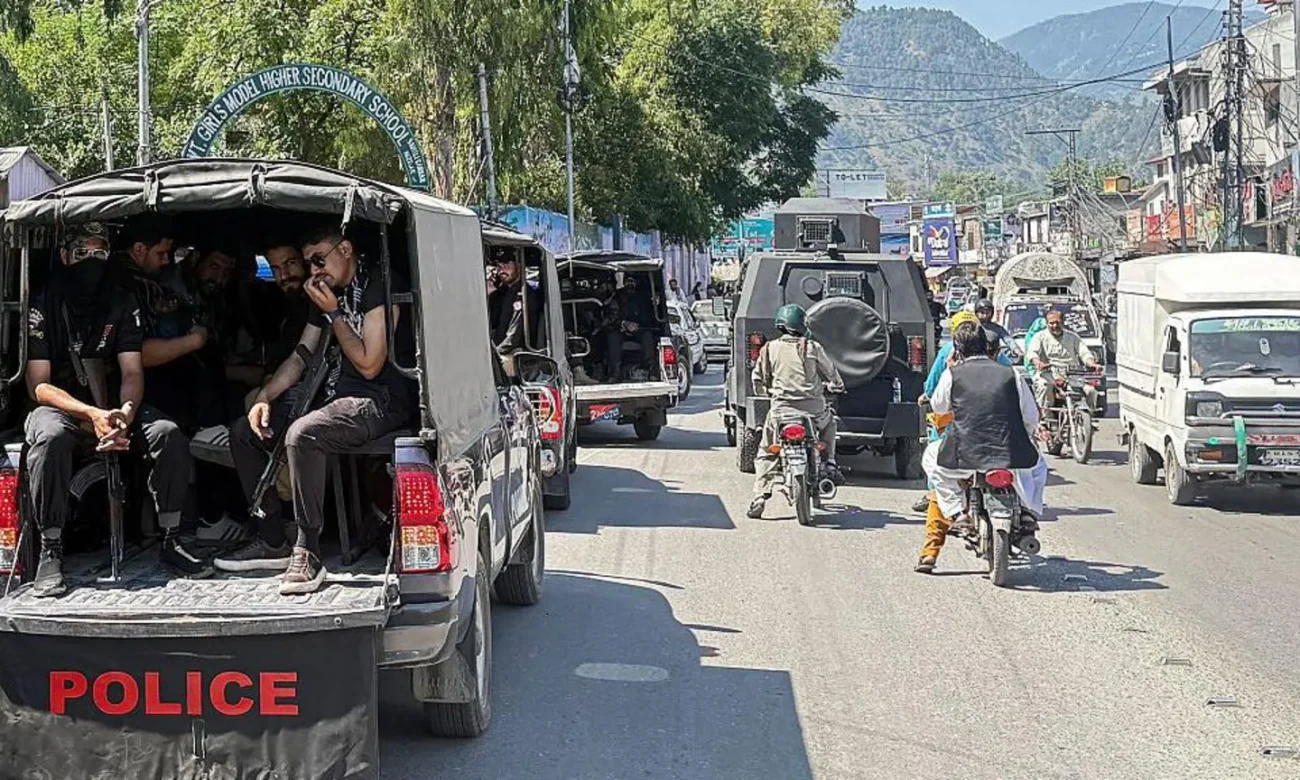
At least 15 people have died during violent confrontations between demonstrators and security personnel in Pakistan-administered Kashmir, according to local officials.
The unrest follows calls for protests by an alliance of activist groups opposing the reservation of legislative assembly seats for refugees who moved to Pakistan from Indian-administered Kashmir decades ago. The authorities have accused the alliance of sedition and violence, outlawed the group and announced rewards for the arrest of its leaders.
Despite the ban, thousands of protesters have continued marching toward the regional capital, Muzaffarabad. They are angered by the fact that 12 assembly seats — nearly one-quarter of the legislature — are set aside for people who do not currently live in Pakistan-administered Kashmir.
Officials say the dead include 11 civilians and four security officers. A large protest convoy, estimated by authorities at more than 10,000 people, is currently about 4km from Rawalkot.
Poonch district commissioner Sardar Waheed Khan told BBC Urdu that security forces were patrolling the area and residents had been advised to remain indoors. He said protesters would not be permitted to pass through Rawalkot on their way to Muzaffarabad. Local mosques have also been broadcasting messages urging people not to leave their homes.
Security has been increased across the region, including aerial surveillance over Muzaffarabad and Rawalakot. Separately, a helicopter crashed in Muzaffarabad on Wednesday, killing all 22 people on board. The military blamed a technical fault shortly after takeoff.
The dispute centers on the upcoming July 27 legislative election. The reserved seats were originally created to give political representation to people displaced from Indian-administered Kashmir who settled in Pakistan while hoping to return if the broader Kashmir dispute was ever resolved.
The Joint Awami Action Committee, or JAAC, argues that the arrangement weakens local representation because residents of Pakistan-administered Kashmir cannot contest those seats. The group says all assembly seats should belong to people who actually live in the territory.
Regional authorities reject that demand, saying the refugee seats remain necessary. On June 5, they banned JAAC under anti-terrorism laws, accusing it of threatening public order and state security.
The region’s Supreme Court has also said the reserved seats are constitutionally protected and cannot be changed through administrative decisions, political deals or public pressure.